
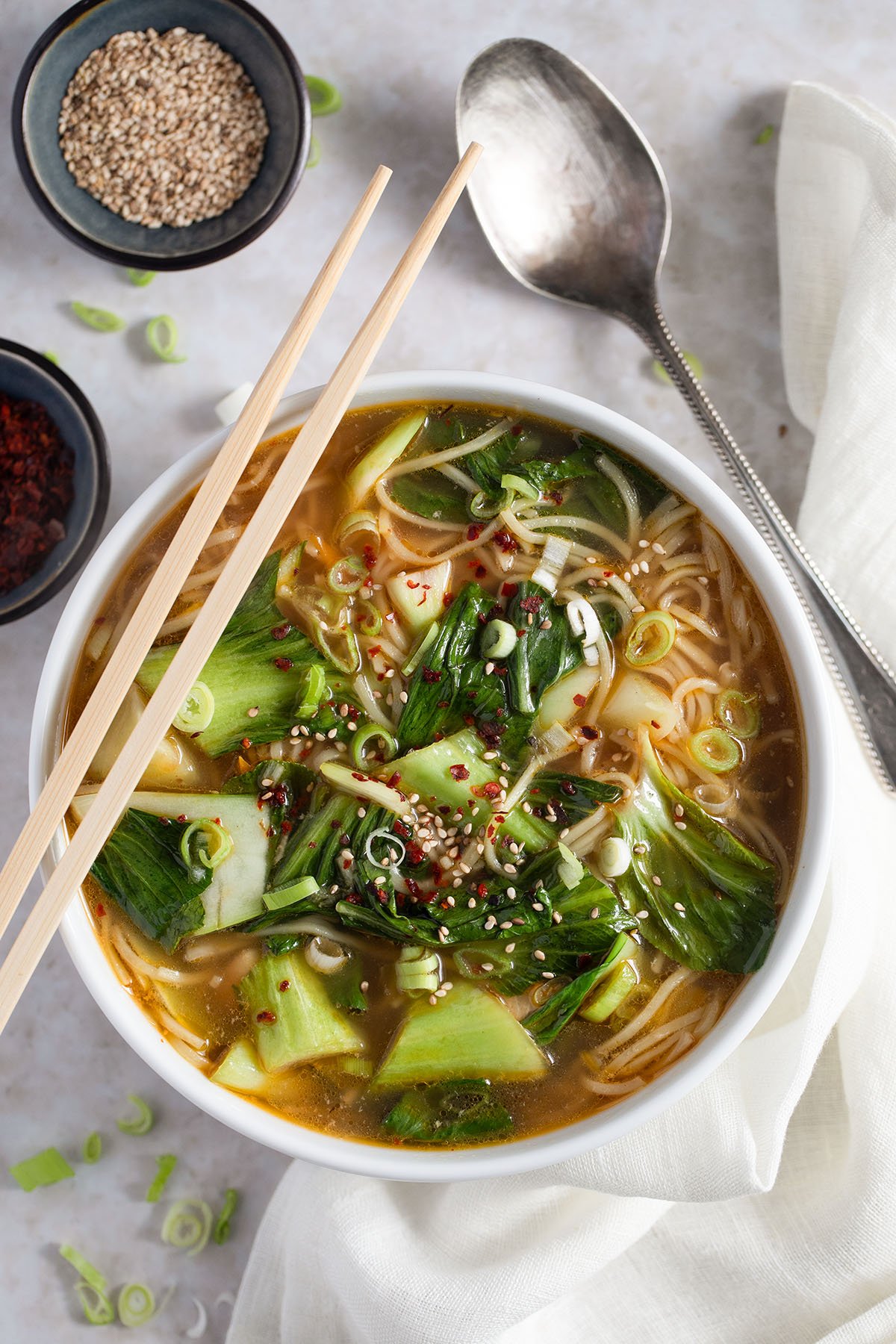
Asian chicken noodle soup made with chow mein noodles, tender chicken, pak choi, and a ginger soy broth. A quick, flavorful dinner ready in about 30 minutes.
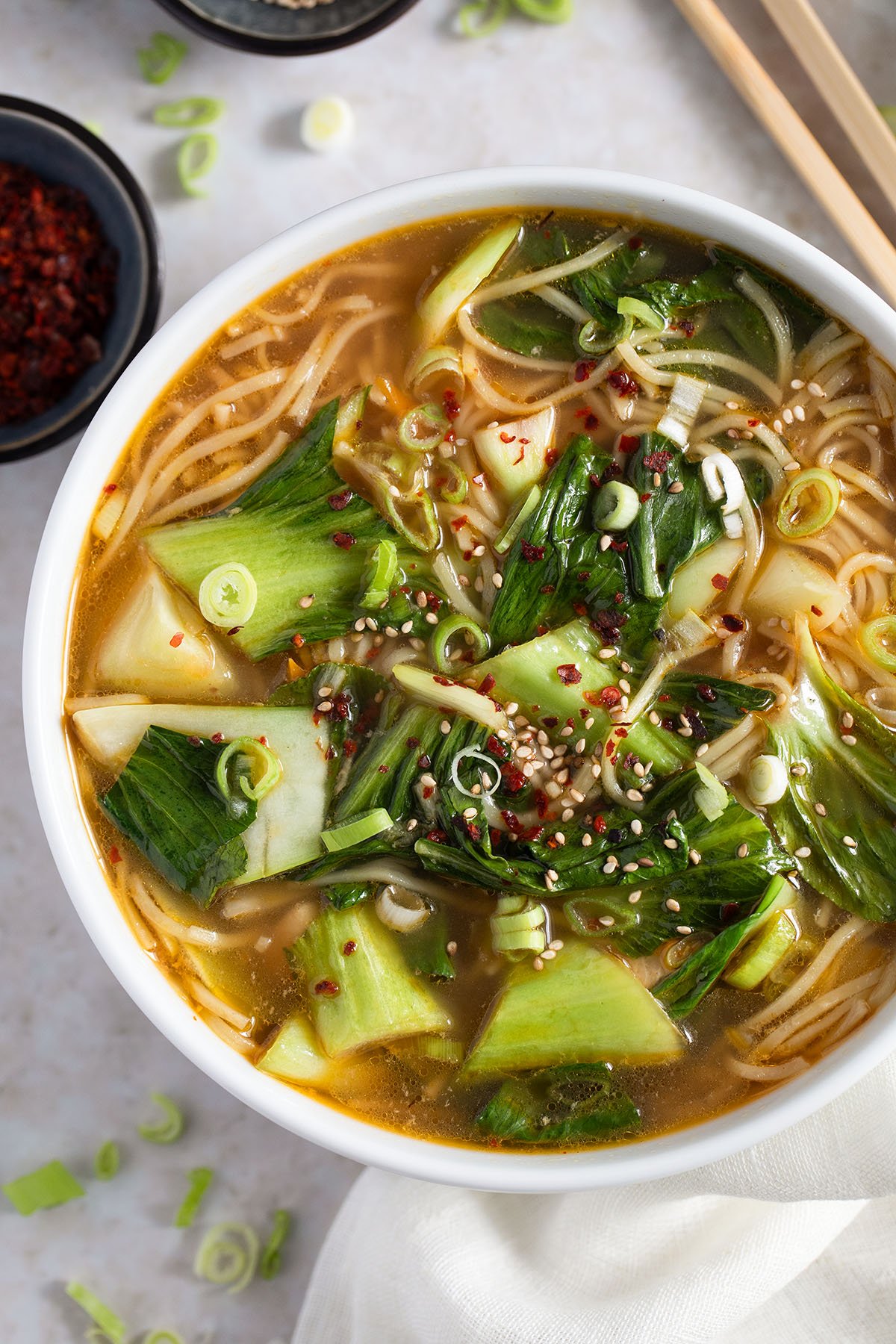
I make this Asian chicken noodle soup when I want something warm and filling without spending the whole evening in the kitchen. It has tender chicken, plenty of noodles, and a broth flavored with ginger, garlic, and soy sauce. A squeeze of lime at the end makes all the difference.
It's on the table in about 30 minutes and works well as a simple weeknight dinner. Everything cooks in one pot, including searing the chicken.
For another cozy soup with noodles, have a look at the Turkey Orzo Soup.
Prep Time: 15 minutes | Cook Time: 15 minutes | Ingredients: 17 + salt & oil | Servings: 4 | Difficulty: Easy
Jump to:
Recipe ingredients
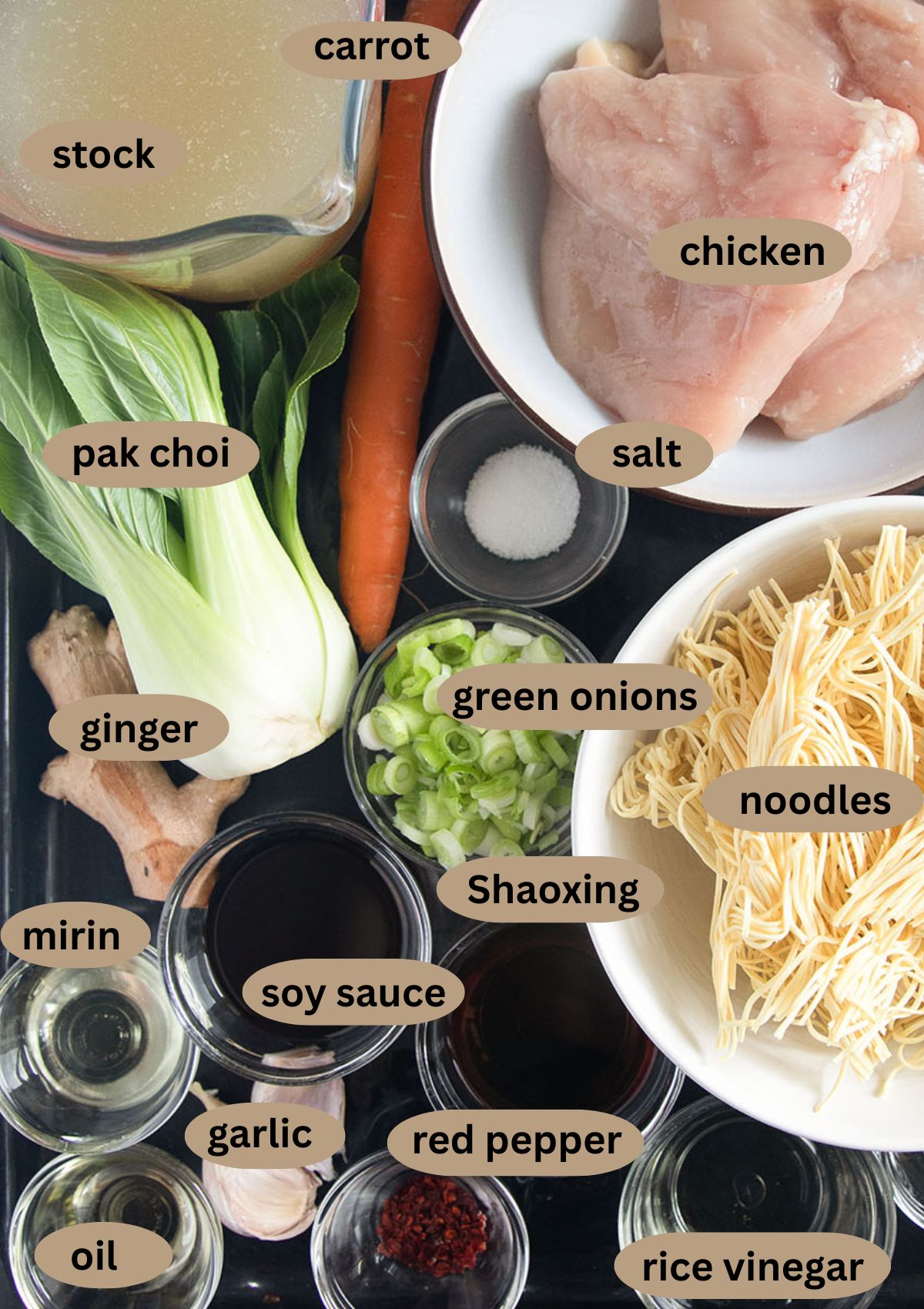
Chicken breast: I use this most of the time, but boneless, skinless chicken thighs work very well too.
Noodles: Use soft chow mein noodles (wheat egg noodles), not the crispy chow mein noodles used for salads. You can replace them with other Chinese wheat noodles of similar thickness, fresh or dried. Thin egg noodles, lo mein noodles, or even spaghetti work if needed.
Pak choi: Also called bok choy, it cooks very quickly and keeps a nice crunch if added at the end; both the leaves and stalks are edible.
Red pepper flakes or 1 long red chili: When I have fresh chili, I use medium-hot and add it to taste. Try this spicy Chorizo and Pumpkin Soup, too.
Shaoxing and mirin: Shaoxing is a slightly sweet Chinese cooking wine that adds flavor to the broth, and mirin is a sweet Japanese rice wine. If you don't have them, dry sherry works instead of Shaoxing, and a little rice vinegar with sugar can replace mirin.
- I also use Shaoxing to make Fried Rice with Turkey.
Other ingredients: Carrots, ginger, green onions, chicken stock, sugar, red pepper flakes (to taste), soy sauce, rice vinegar, and sesame oil.
See the recipe card for complete information on ingredients and quantities.
How to make Asian chicken noodle soup?
Preparations: Julienne the carrots and set them aside. Finely chop the ginger and garlic and keep them separate from the carrots. Finely slice the onions, keeping the white and green parts separate. You can place the white parts in the bowl with the pak choi.

Step #1: Cook and drain the noodles. Place them in a bowl and toss with sesame oil so they don't stick together. While the noodles cook, continue with the soup recipe.
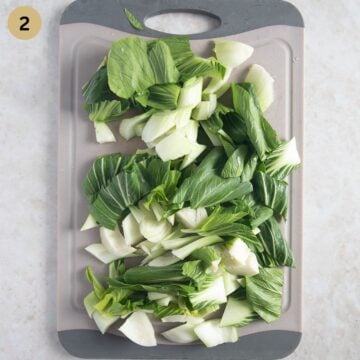
Step #2: Slice the pak choi at an angle and set it aside.
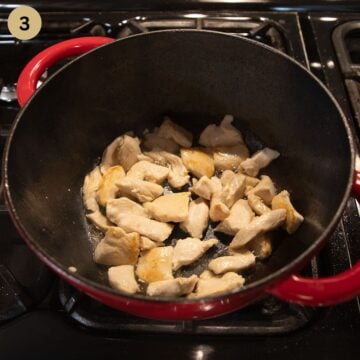
Step #3: Wipe the pot dry and heat a bit of oil. Cook the chicken in two batches, adding a little more oil after the first batch. Remove the chicken from the pot.
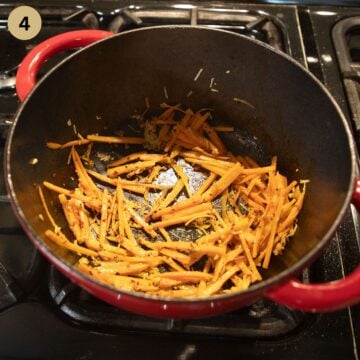
Step #4: Heat a bit more oil and cook the carrots for 2 minutes. Add ginger, garlic, and red pepper flakes and stir for 1 minute.
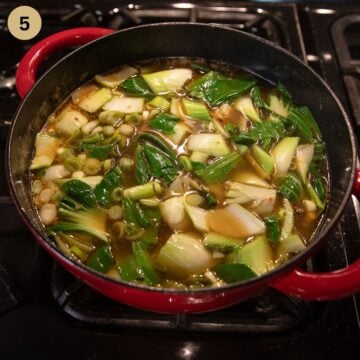
Step #5: Add the chicken back, then stock, Shaoxing, rice vinegar, soy sauce, mirin, and sugar. Bring to a boil and cook for 2 minutes without a lid. Add the pak choi and the white parts of the onions. Cook for 2 minutes.
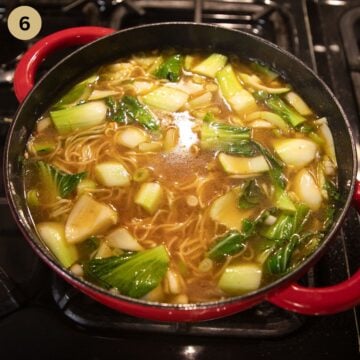
Step #6: Add the noodles and reheat for 1 minute or so. Adjust the taste with salt and lime juice, then add the green parts of the onions.
Tips
The taste: The broth should taste a bit salty, a little sweet, and slightly sour. Adjust with more soy sauce, lime, or sugar until it tastes right to you.
Don't overcook the pak choi - add it at the end so it stays crisp and bright.
Noodle cooking time: Check the package instructions carefully - different brands or types of noodles may cook faster or slower. Drain them as soon as they're done and toss with a little sesame oil so they don't stick before adding to the soup.
Variations
You can swap the chicken for shrimp or tofu for a different protein. Sear them briefly in the pan, remove them, and add them at the end. Try this Chicken and Cabbage Soup next.
Replace the pak choi with baby spinach or other vegetables, or add extra vegetables like bell peppers, mushrooms, or snap peas if you like more greens.
Adjust the chili or red pepper flakes for a milder or spicier soup.
Store and reheat
Refrigerate: Store the soup in an airtight container in the fridge for up to 3 days.
Reheat gently on the stove over medium heat until warmed through. You can also reheat in the microwave in a covered bowl, stirring halfway, but be careful not to overcook the noodles - they can get mushy.
More Asian-inspired recipes
Sign up for our Newsletter to receive new, quick, and delicious recipes in your inbox occasionally! Find me sharing daily meal-time inspiration on Pinterest and Facebook
Give my quick recipes a try for your next family meal! Feel free to reach out if you need any assistance!
📖 Recipe
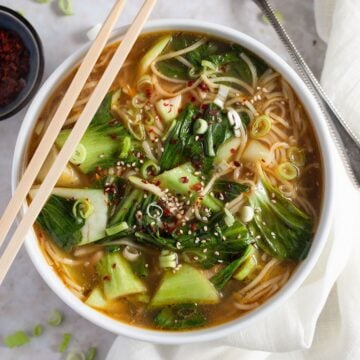
Asian Chicken Noodle Soup
Equipment
- Soup pot or large Dutch oven
Ingredients
- 7 oz chow mein noodles Note 1
- 1 teaspoon sesame oil
- 2 carrots julienned
- 3 garlic cloves finely minced
- 2 inch pieces ginger 5 cm, finely minced
- ½ teaspoon red pepper flakes or 1 long red chili finely chopped, to taste
- 10.5 oz pak choi sliced, Note 2
- 2 spring onions sliced (whites and greens separated)
- 1 lb chicken breast thinly sliced
- 2 tablespoons vegetable oil divided
- 4 cups chicken stock
- 2 tablespoons Shaoxing
- 2 tablespoons rice vinegar
- 2 tablespoons soy sauce
- 1 tablespoon mirin
- 2 teaspoons sugar
- 1-2 limes to taste and for serving
- 1 teaspoon toasted sesame seeds for garnishing
Instructions
- Cook the noodles: Bring a large pot of water to a boil. Cook the noodles according to the package instructions (mine needed 4 minutes). Drain well, place in a bowl, and toss with the sesame oil to prevent sticking. Set aside.7 oz chow mein noodles + 1 teaspoon sesame oil
- Julienne the carrots: Peel the carrots and cut them into thin, even slices. Stack a few slices, then cut them into thin matchstick-sized strips about 2 inches (5 cm) long. Set them aside.2 carrots
- Prepare the vegetables: Finely mince the garlic, ginger, and chili. Slice the pak choid into 1-inch (2.5 cm) pieces. Slice the spring onions into thin rings, keeping the white and green parts separate.3 garlic cloves + 2 inch pieces ginger + ½ teaspoon red pepper flakes or 1 long red chili + 10.5 oz pak choi + 2 spring onions
- Slice the chicken: Slice the chicken breast thinly and set aside.1 lb chicken breast
- Cook the chicken: Wipe the pot dry if needed. Heat ½ tablespoon of oil over medium-high heat. Cook half the chicken until lightly golden, about 2-3 minutes. Remove and repeat with the remaining ½ tablespoon of oil and the rest of the chicken. Set aside.1 tablespoons vegetable oil
- Cook vegetables: Add 1 tablespoon of oil to the pot. Stir-fry the carrots for 2 minutes. Add garlic, ginger, and chili and cook for 1 minute, stirring constantly.1 tablespoons vegetable oil
- Cook the soup: Return the chicken to the pot. Add chicken stock, Shaoxing, rice vinegar, soy sauce, mirin, and sugar. Bring to a boil and simmer uncovered for 2 minutes.chicken + 4 cups chicken stock + 2 tablespoons Shaoxing + 2 tablespoons rice vinegar + 2 tablespoons soy sauce + 1 tablespoon mirin + 2 teaspoons sugar
- Add pak choi and the white parts of the spring onions. Cook for another 2 minutes until just tender.
- Add the noodles and heat through. Adjust with salt and lime juice to taste. Start with 1 tablespoon, taste and adjust as needed (Note 4).
- Serve: Ladle into bowls and top with the green parts of the spring onions and the toasted sesame seeds. Serve with lime wedges.1-2 limes + 1 teaspoon toasted sesame seeds
Notes
- Noodles: Use soft chow mein noodles (wheat egg noodles), not the crispy salad-style ones. You can substitute similar Chinese wheat noodles, thin egg noodles, lo mein noodles, or even spaghetti. Rice noodles also work; cook them separately first.
- Pak choi: Also called bok choy. You can replace it with baby spinach or other vegetables. If using peppers or mushrooms, slice them thinly and sauté them with the carrots. Sugar snap peas can be added at the end, just like the pak choi.
- Protein: Swap the chicken for shrimp, tofu, or another protein. Cook briefly in the pot, remove, and add back at the end.
- The taste: The broth should taste a bit salty, a little sweet, and slightly sour. Adjust with more soy sauce, lime, or sugar until it tastes right to you.

Comments
No Comments